How to Build and Test a Node.js Application
Configure a build configuration in BuildNinja to automatically install dependencies, run tests, and build a Node.js application. This configuration uses:
- Native Git support to fetch source code.
- Command Line runner to execute
npmcommands. - Artifacts and caching-ready structure to optimize future builds.
Prerequisites
Before you begin, ensure that:
- You have access to a BuildNinja project.
- Your Node.js repository contains a valid package.json.
- Test and build scripts are defined, for example:
"scripts": {
"test": "npm test",
"build": "npm run build"
}
Step 1: Create Build Configuration
-
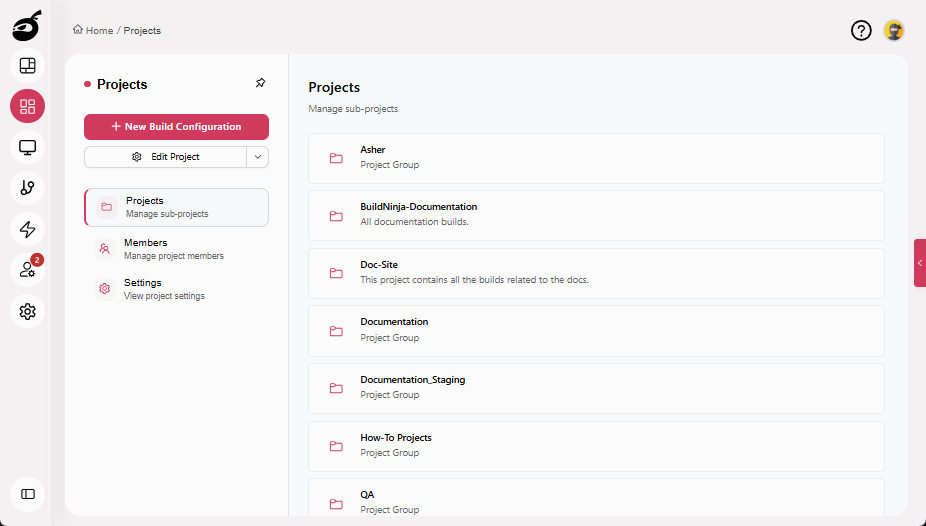
Navigate to Projects.
-
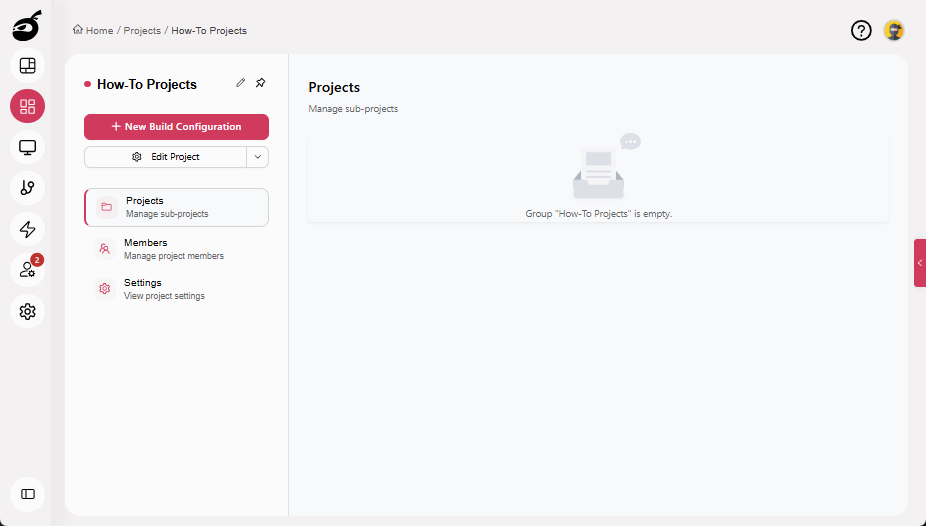
Select the project where you want to configure the build.
-
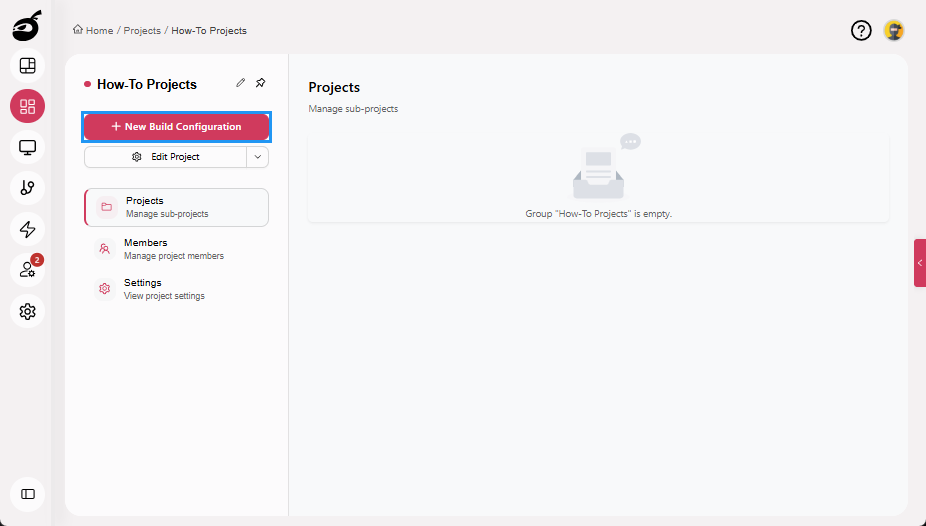
Click New Build Configuration.
-
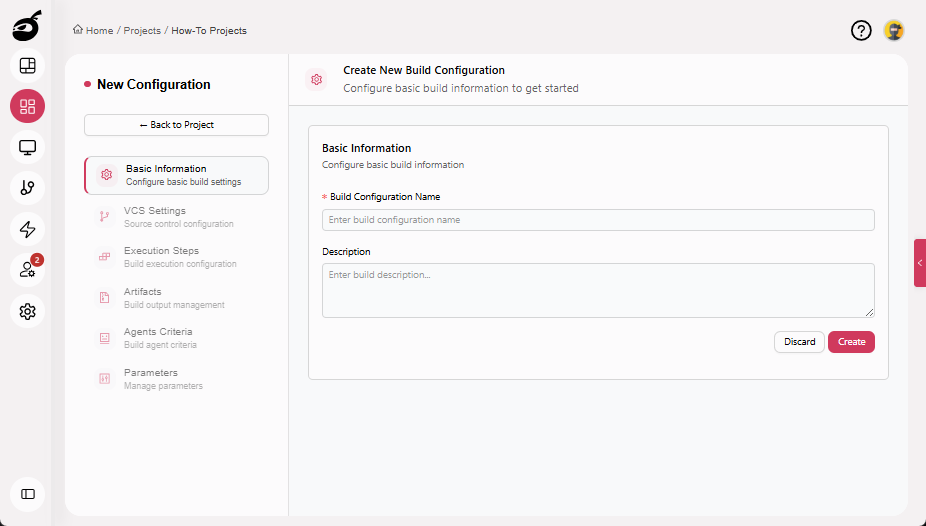
Enter the following details:
- Build Configuration Name (for example, Node.js Build & Test).
- Description (optional).
-
Click Create.
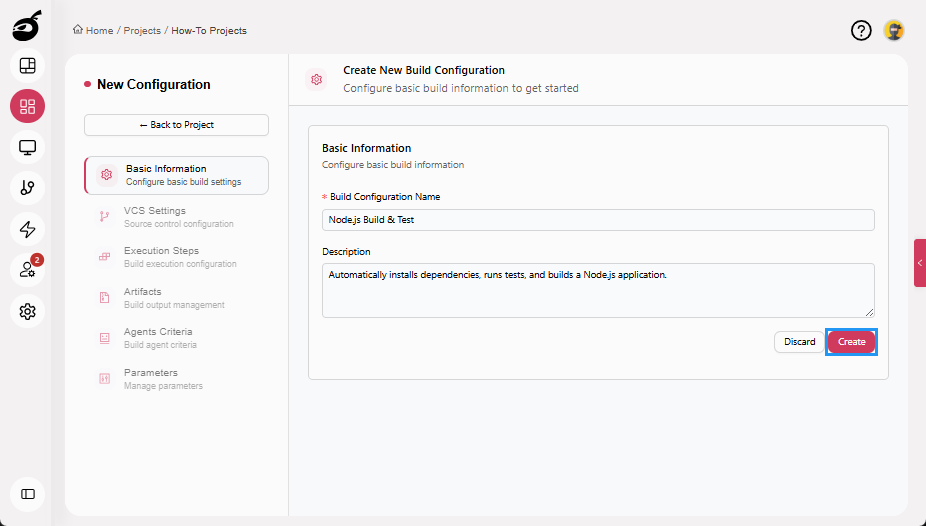
For more details about creating and managing build configurations, see Configure and Edit BuildsBuilds in a CI/CD environment represent a defined set of execution steps that run automatically to build, test, package, or prepare an application for deployment..
Step 2: Configure VCS Settings
-
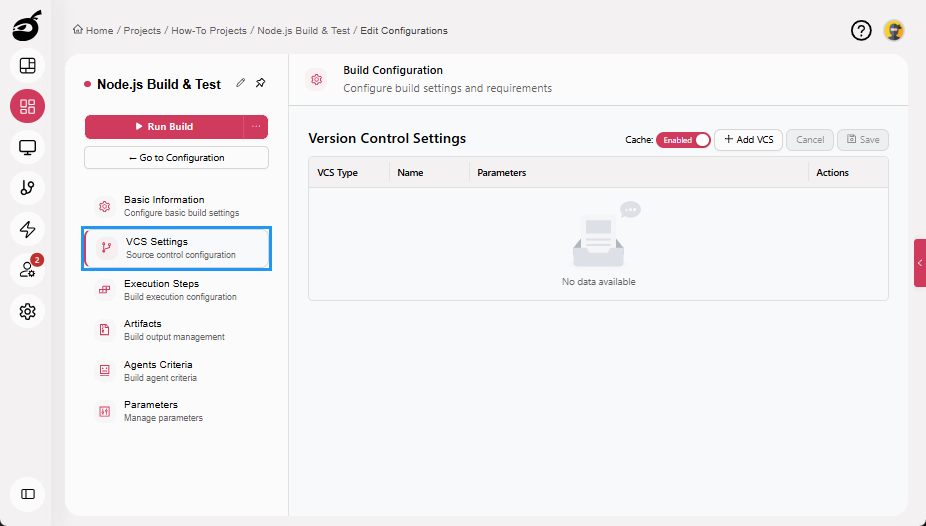
Navigate to VCS Settings.
-
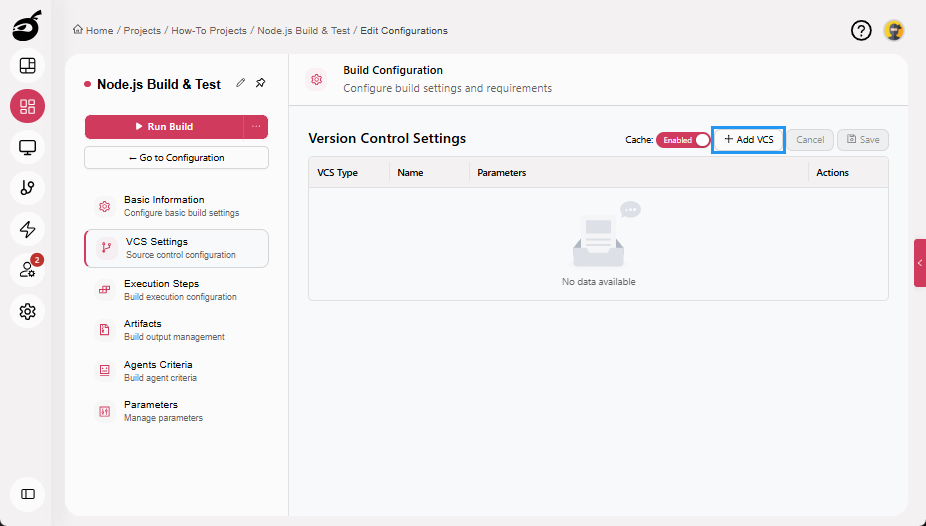
Click Add VCS.
-
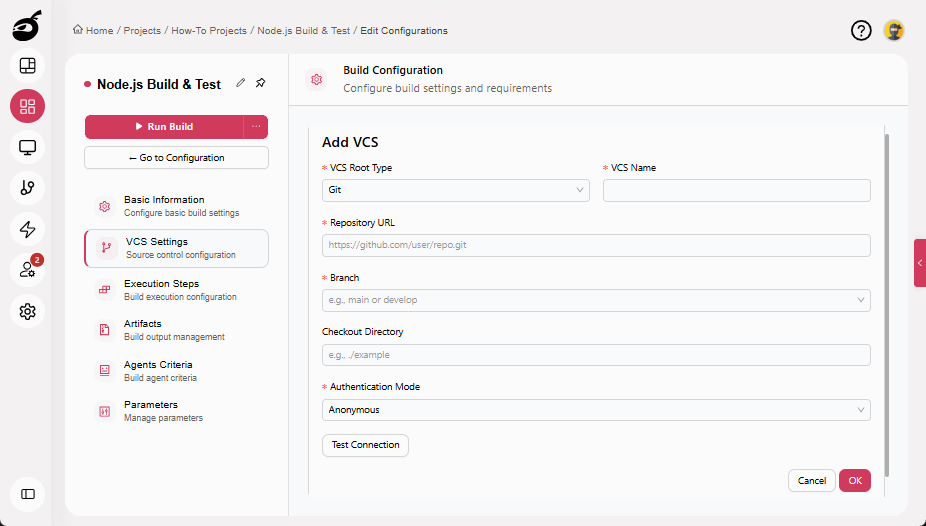
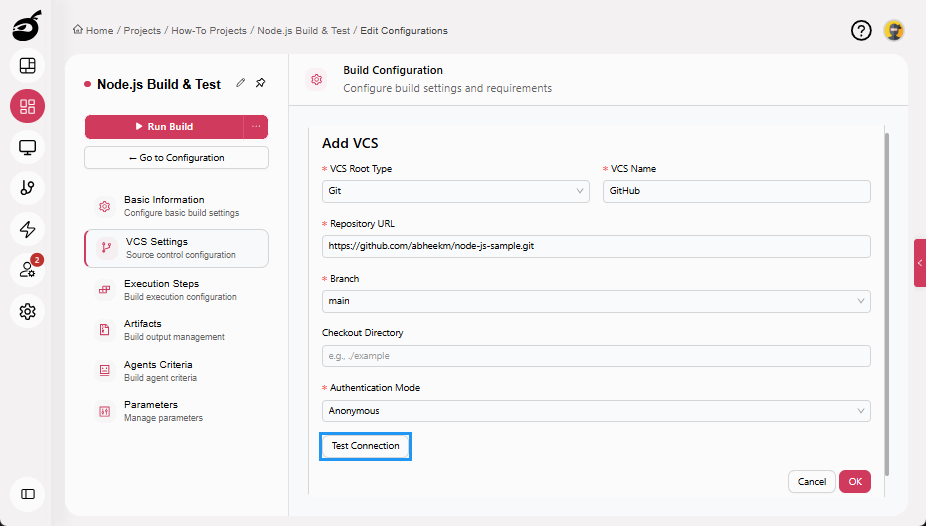
Enter the following details:
- VCS Root Type: Git.
- VCS Name: A unique identifier.
- Repository URL: Git repository URL.
- Branch: main, develop, or your target branch.
- Checkout Directory: Optional, default is recommended.
- Authentication Mode: Select the required authentication method.
-
Click Test Connection to verify access (optional).
-
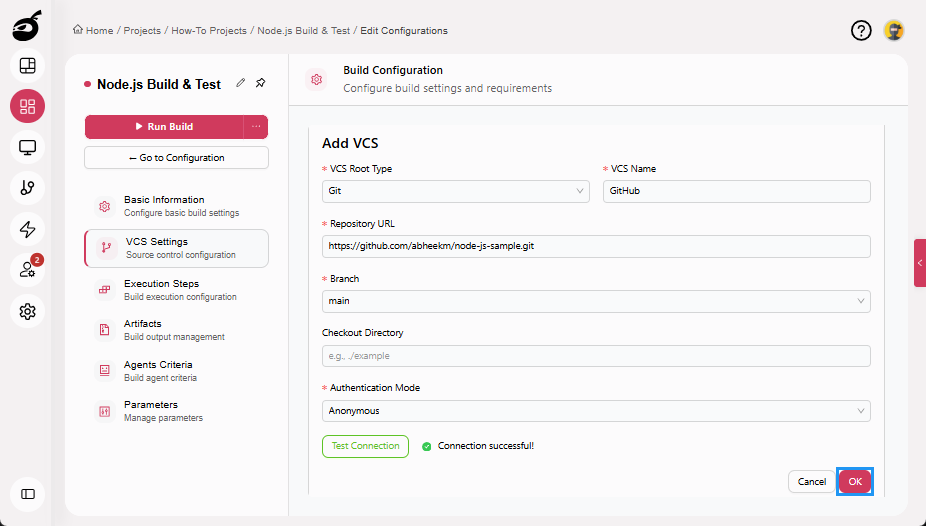
Click OK to add the VCS.
-
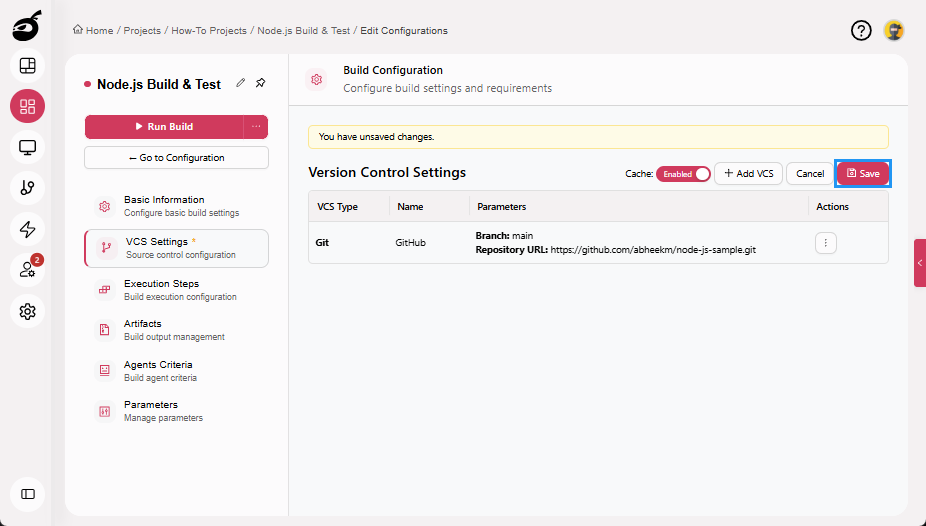
Click Save to save the VCS Settings.
 note
noteBuildNinja will now automatically fetch your source code from Git when the build runs.
Step 3: Configure Execution Steps
Step 3.1: Install Dependencies
-
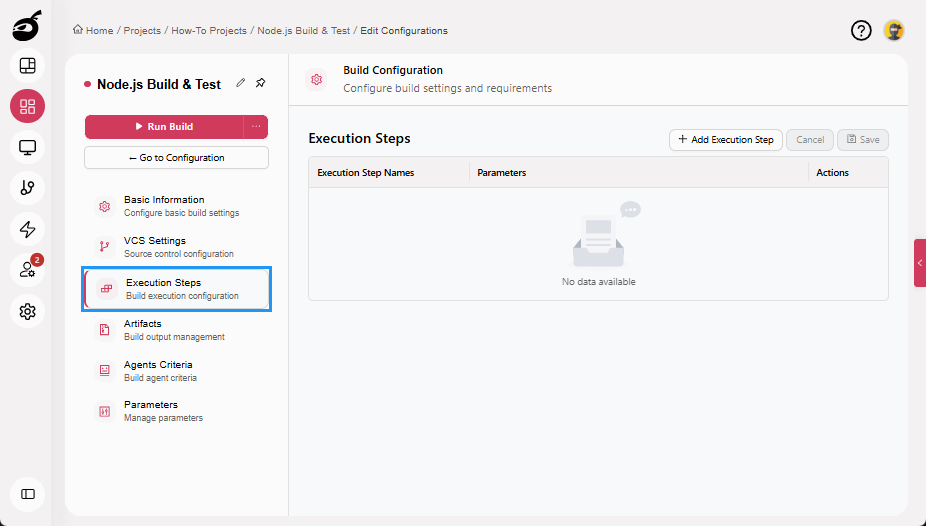
Navigate to Execution Steps.
-
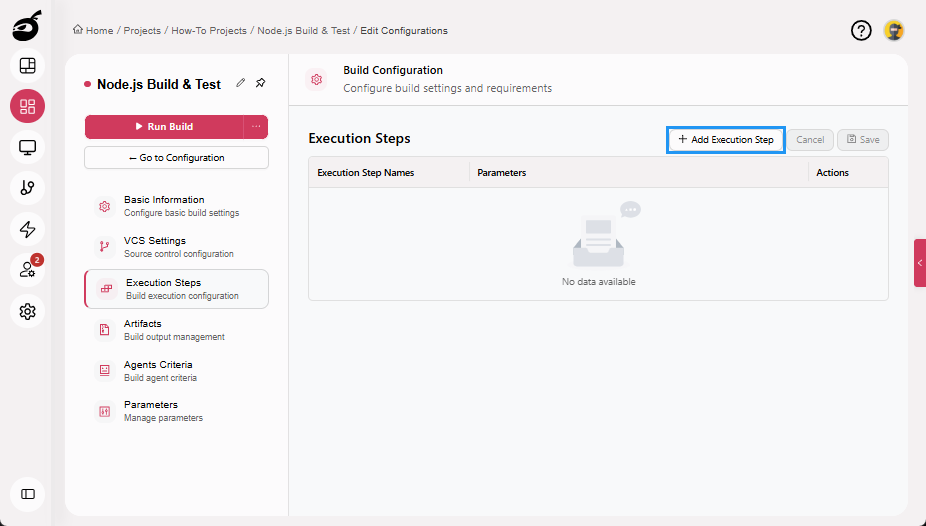
Click Add Execution Step.
-
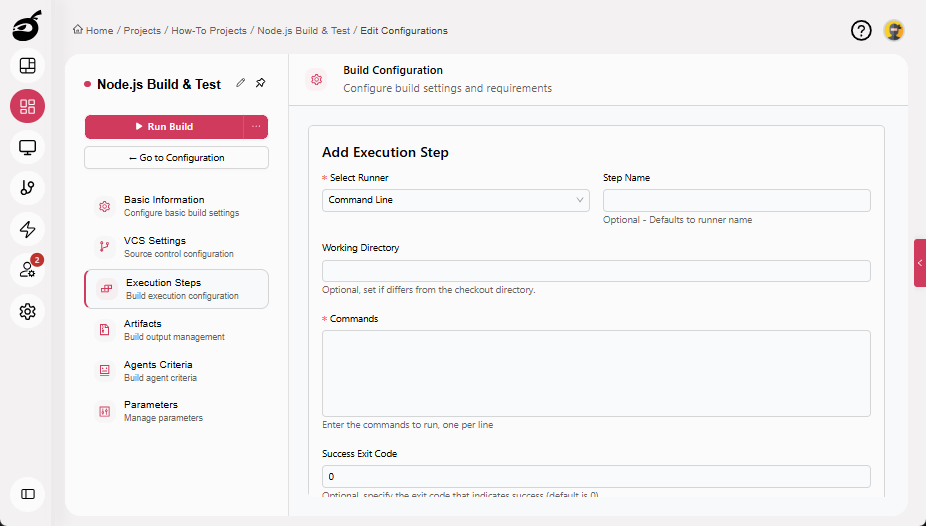
Enter the following details:
- Select Runner: Command Line
- Step Name: Install Dependencies
- Working Directory: Leave blank for default.
- Commands:
npm install
-
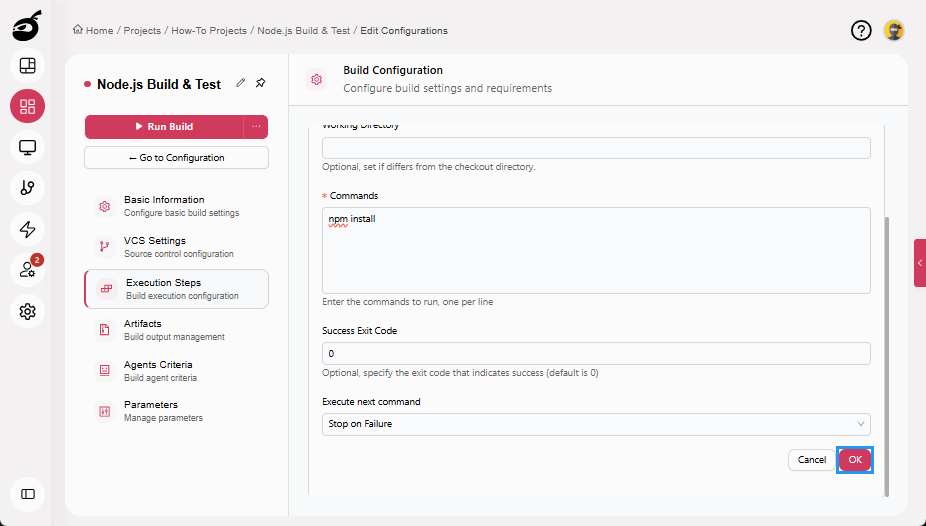
Click OK to add the execution step.
-
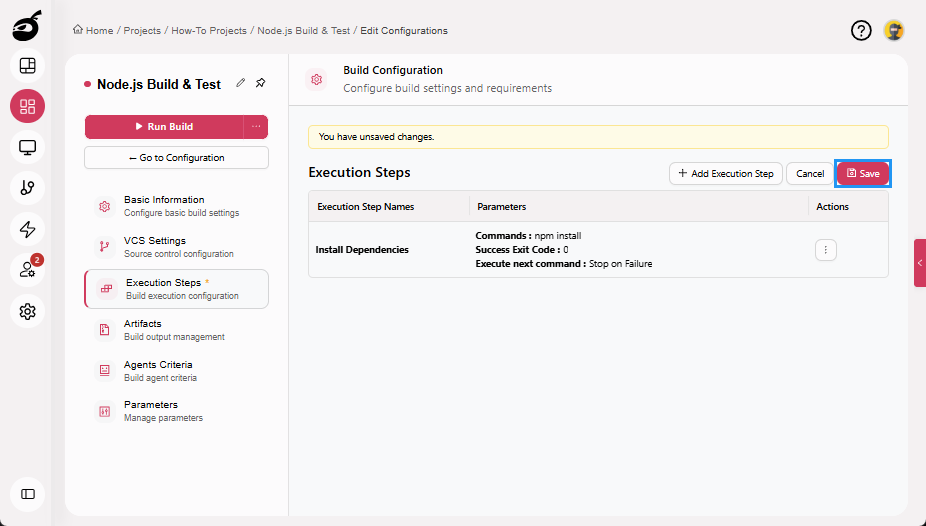
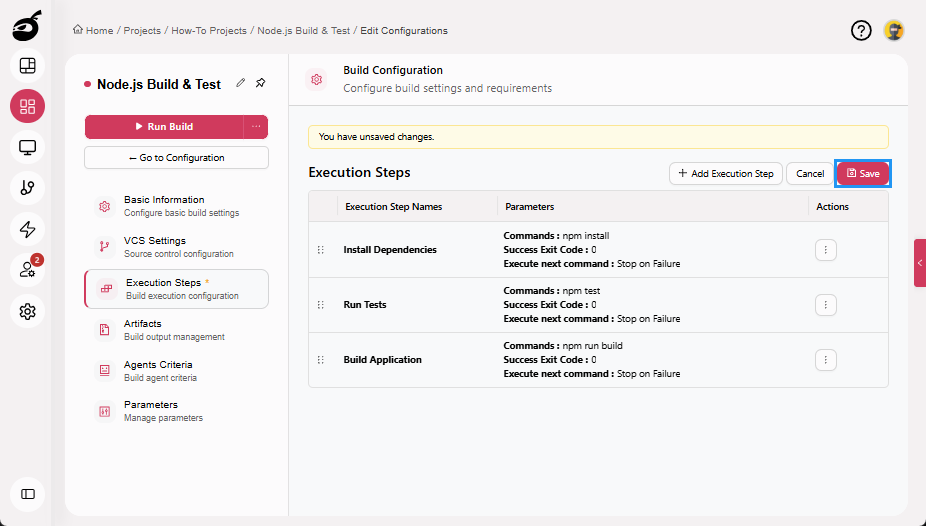
Click Save to save the Execution Steps.
Step 3.2: Run Tests
-
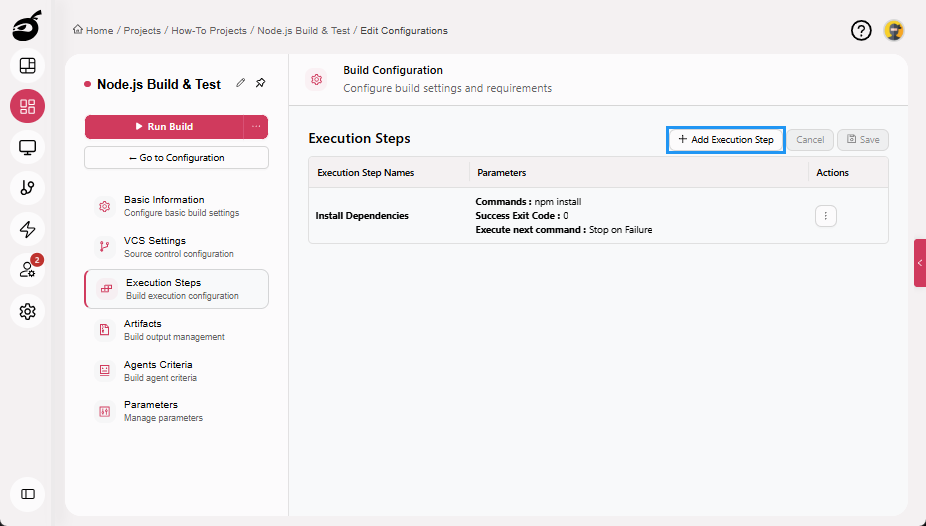
Click Add Execution Step.
-
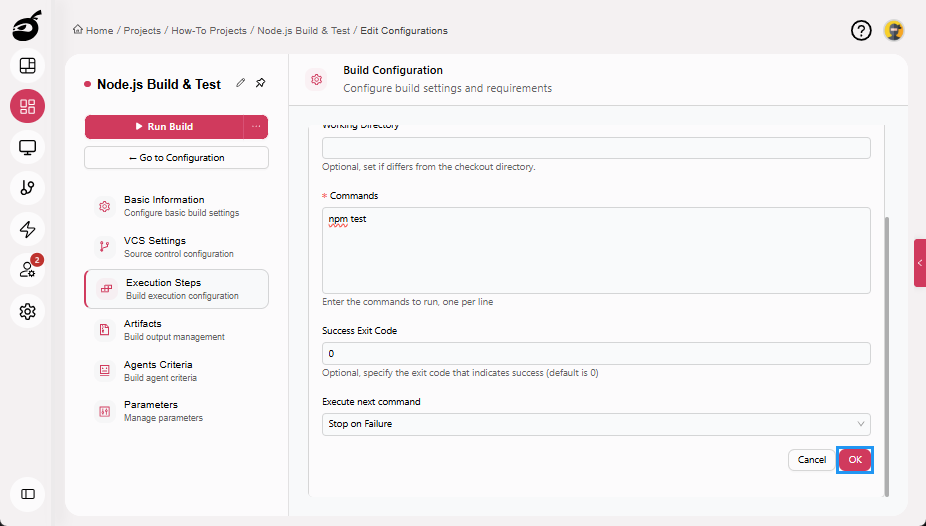
Enter the following details:
- Select Runner: Command Line
- Step Name: Run Tests
- Commands:
npm test
-
Click OK to add the execution step.
-
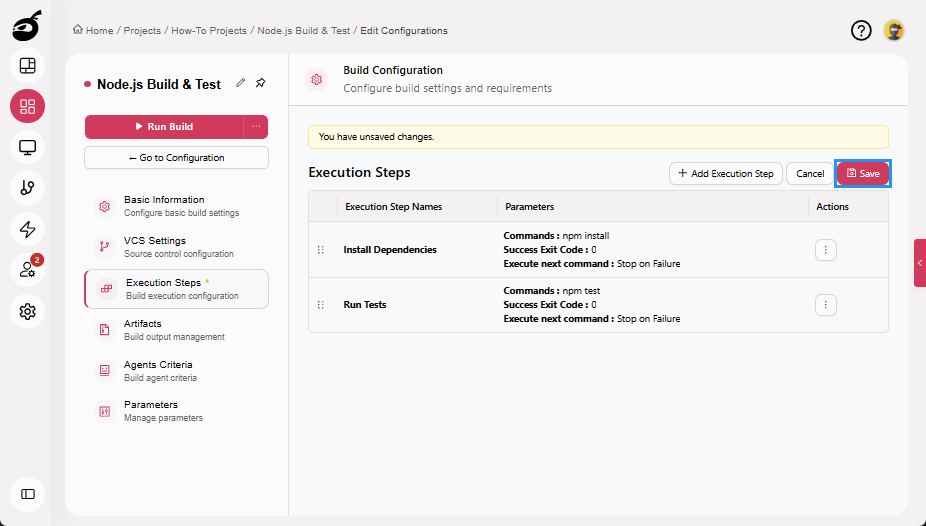
Click Save to save the Execution Steps.
Step 3.3: Build Application
-
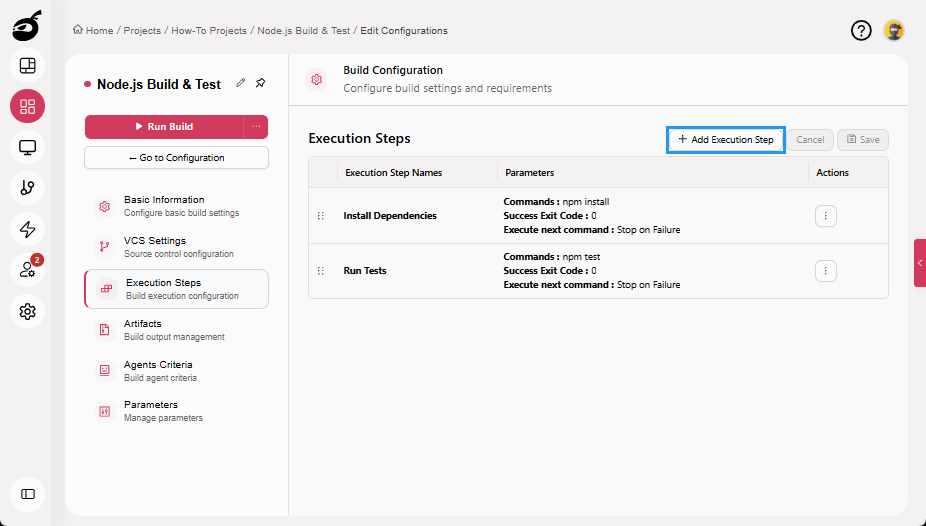
Click Add Execution Step.
-
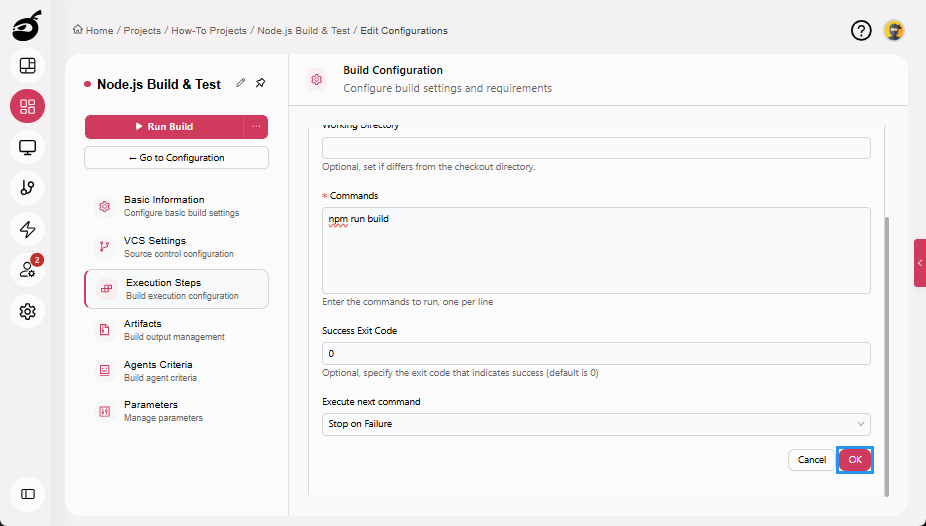
Enter the following details:
- Select Runner: Command Line
- Step Name: Build Application
- Commands:
npm run build
-
Click OK to add the execution step.
-
Click Save to save the Execution Steps.
Step 4: Configure Artifacts (Optional but Recommended)
Artifacts allow you to store build outputs such as compiled files or bundles.
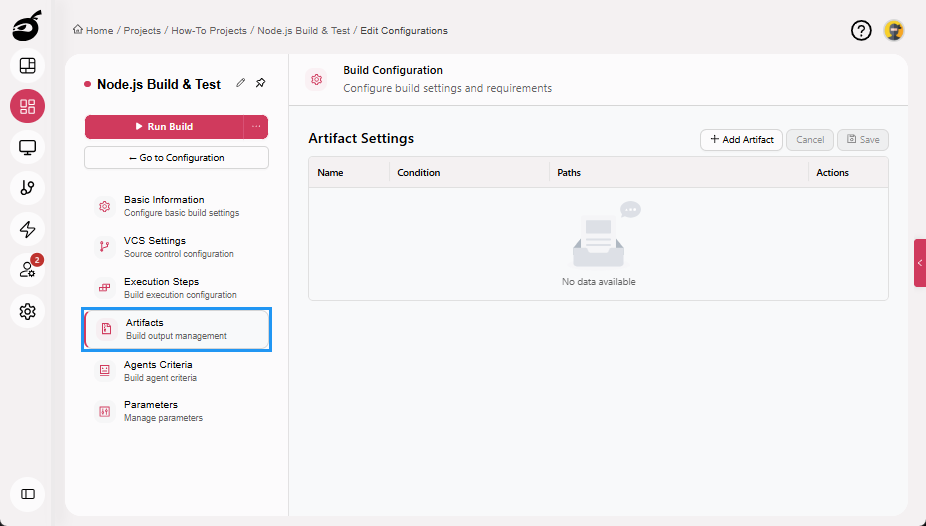
-
Navigate to Artifacts.
-
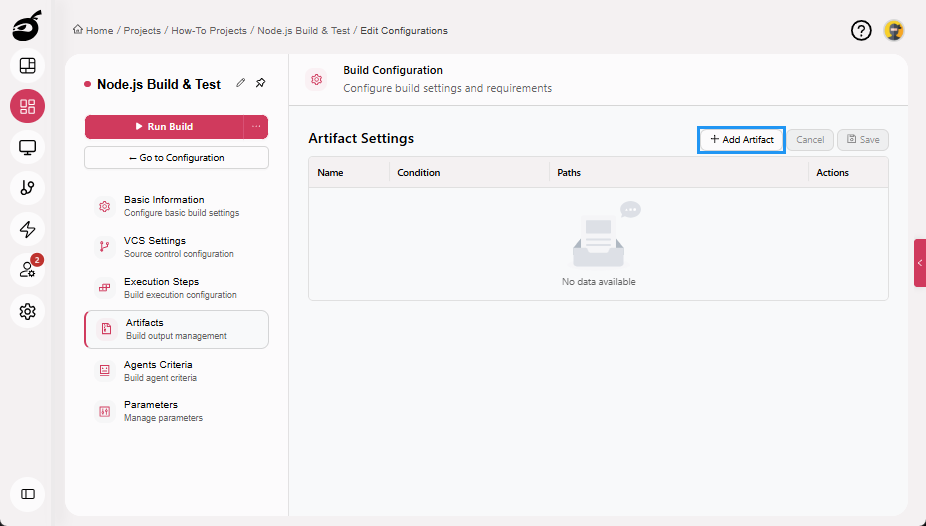
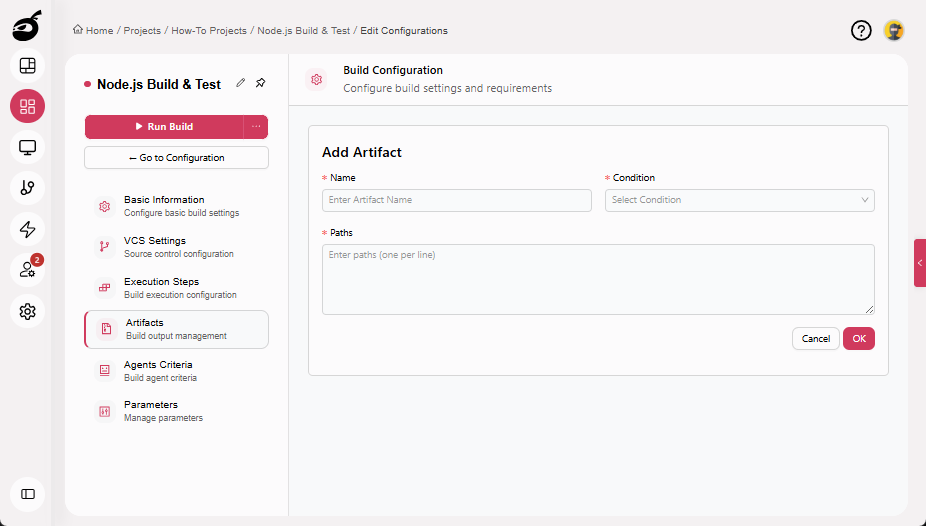
Click Add Artifact.
-
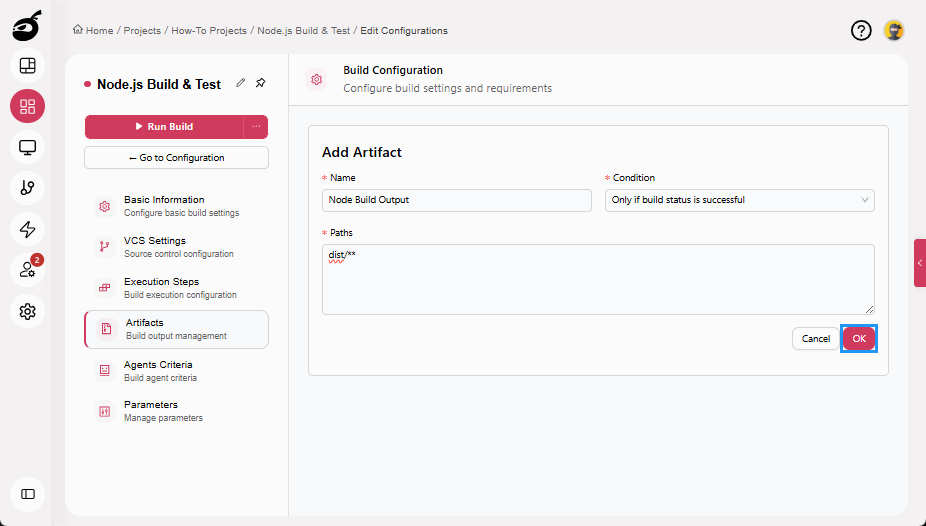
Enter the following details:
- Name: Node Build Output
- Condition: Only if build status is successful
- Paths: dist/** or your project’s build output directory
-
Click OK to add the artifact.
-
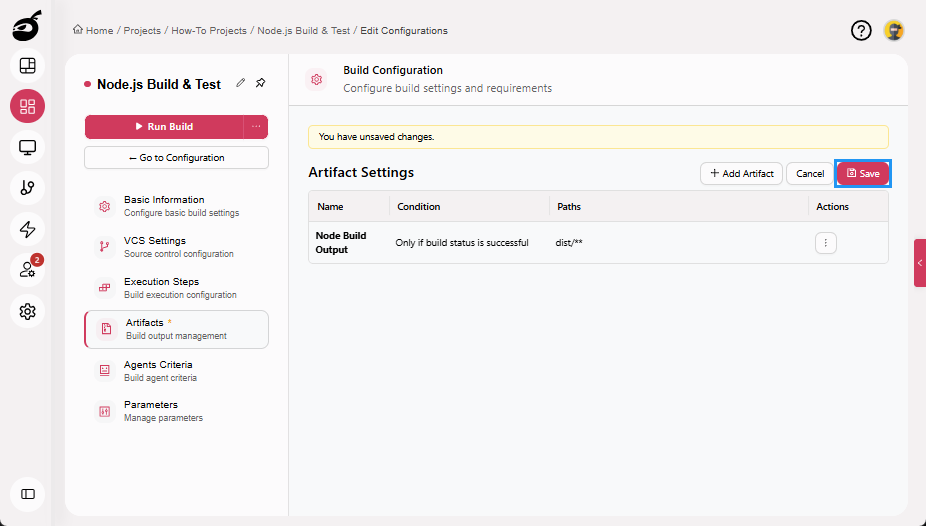
Click Save to save the Artifacts.
Step 5: Run Builds
Your build configuration is now complete.
Running a build executes the steps defined in the build configuration, such as installing dependencies, running tests, and generating build outputs. In BuildNinja, build configurations define what a build does and control when it runs.
Step 5.1: Run Build Manually
-
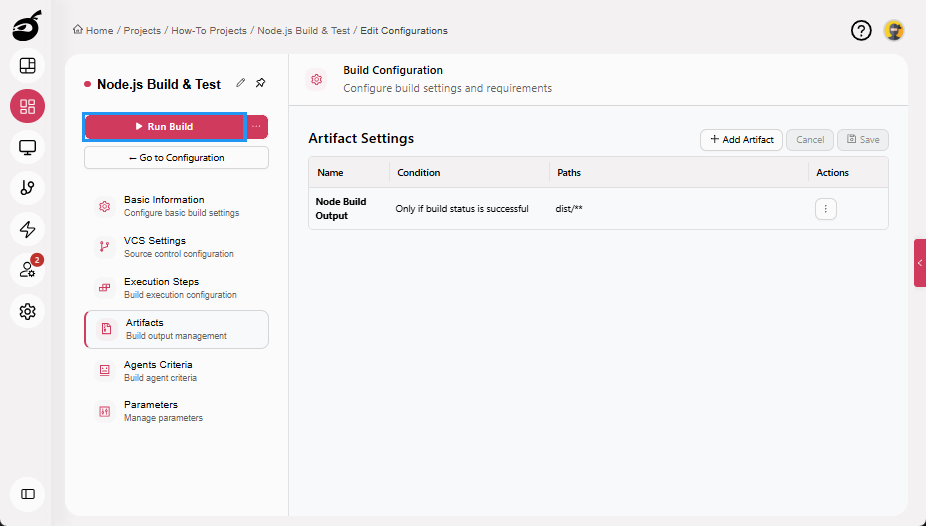
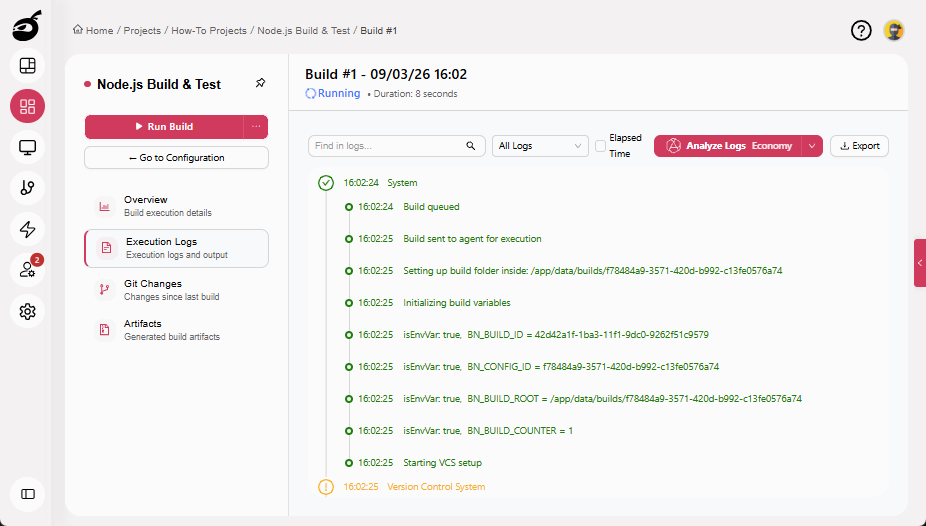
Click Run Build to start the build manually. Once triggered, the build enters the execution queue and starts automatically when a compatible agent becomes available.
Step 5.2: Monitor Build Execution
While the build is running, you can view detailed logs for each execution step, including:
- Dependency installation
- Test execution
- Build output
These logs help you verify successful execution and troubleshoot failures. For more details about viewing build logs, step status, and overall build results, see View Build ResultsBuild results provide detailed insights into each successful or failed build in BuildNinja. You can review execution outcomes, analyze logs, understand source code changes, and access any generated artifacts..
Step 5.3: Schedule Build (Optional)
BuildNinja supports scheduled build triggers that allow builds to run automatically on a defined schedule. To learn how to configure and manage build triggers, see Schedule Build TriggersBuildNinja supports Build Triggers that allow builds to start automatically based on time schedules or Git activity. These triggers help streamline workflows by eliminating the need for manual build execution..